Reviews
The Monterey Symphony's first season with its new music director kicks off this weekend.
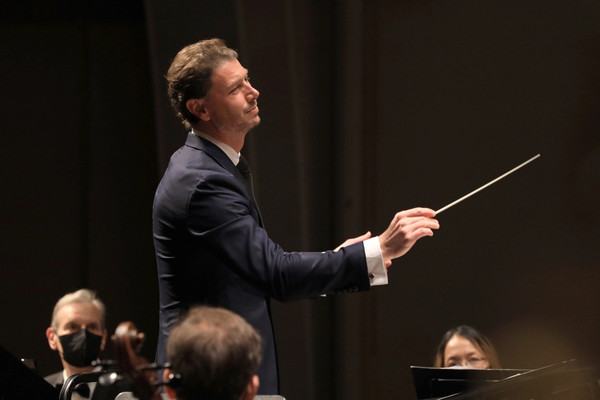 Firmly grounded in the classics, Jayce Ogren seems an excellent choice to lead and innovate with the Monterey Symphony orchestra. Photo by Randy Tunnell
The Jayce Ogren era of the Monterey Symphony officially begins this weekend when the baton is formally passed to the new music director.
Speaking from his home in Ann Arbor last week, where he was recently named associate professor of music at the University of Michigan, Ogren was bubbling with enthusiasm.
"I'm just itching to get to Monterey," he says. "Throughout the interview process, I was struck by how the core group of board members and executives cared so deeply about the orchestra and so carefully shepherded it through the difficult times of the pandemic. I also got a clear message that the orchestra is ready for change."
Ogren has given the season itself a title – Overture – and this weekend's season-opening outing is dubbed Emergence.
"Emergence, like Overture, signifies new beginnings," Ogren says. "The opening of a whole new season. My debut leading this orchestra. The new directions we will be taking. All of those are beginning at the same time."
This weekend's program demonstrates Ogren's ability to meld old and new. Sandwiched between the familiarity of the six-minute finale of Igor Stravinsky's beloved Firebird Suite (1910) and the concert-closing classic trumpet melody which begins with Mussorgsky's Pictures at an Exhibition (1874) are three less familiar offerings.
Steven Mackey's beautifully crafted Turn the Key (2006) is an 11-minute dance-like romp through much of the vocabulary of modern avant-garde classical composition. Alexander Glazunov's energetic, ebullient Saxophone Concerto (1934) – featuring Ogren's faculty-mate at the University of Michigan, Timothy McAllister, soloing – comes next. "Sax is such a vocal instrument," Ogren says, "and Timothy's tone is so clean and clear it reminds of bells." Giacomo Puccini's six-minute Intermezzo from Act III of Manon Lescaut (1892), a four-movement Italian language opera, follows the saxophone.
"It's unfamiliar because it is rarely performed," Ogren says. "It just doesn't fit in the standard concert programming model. The paradigm of programming an overture, a concerto and then a long symphony after intermission is a bit tired. If we want new audiences, we have to offer new musical experiences."