Reviews
2019-2020: Ovation
The Monterey Symphony dedicates this season to retiring conductor, with performances of his favorites.
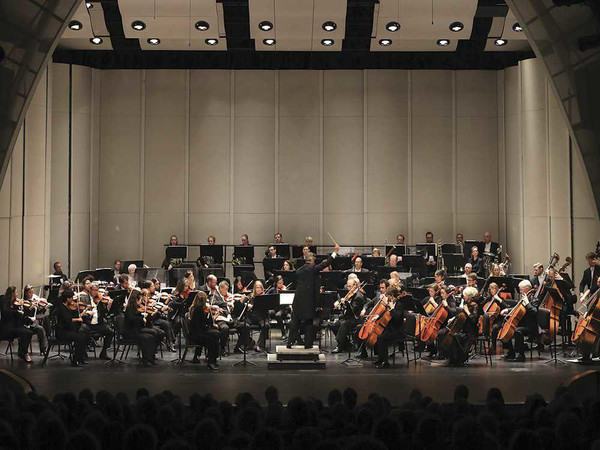 Max Bragado-Darman kicks off his final season as conductor with works by Berlioz, who he calls “a renegade—he sounds traditional now, but in his time was an avant-garde bombshell.” Randy Tunnell
The anticipation of any opening night concert is palpable, but this year's Monterey Symphony opener seems especially so, as the six-concert sojourn comprises the swan song for the orchestra's beloved music director and principal conductor Max Bragado-Darman. In May, the maestro exits the podium for the final time after 16 years at the helm, retiring to his longtime residence in Valladolid, Spain near Madrid.
Bragado-Darman seems relaxed and confident about his exit strategy.
"As to beyond this season, I really don't know where it will take me," he says. "I have many projects in mind, and I'm looking forward to quality time with my family, my own piano and with my favorite composer, Johann Sebastian Bach. Beyond that I have no idea – it's a brand-new chapter."
Last season's series was named Sound Waves, as all selections were water-based in theme. This season is called Ovation.
"Ovation – that nomenclature surprised me a bit, frankly," Bragado-Darman says. "This season is comprised of all of my favorite masterworks, but there is no unifying theme like last year's water theme."
Monterey Symphony Executive Director Nicola Reilly explains that because there was no single thread running through the selections, the symphony instead decided to honor Bragado-Darman's bow out. Concert one launches with two works by 19th-century French Romantic composer Louis-Hector Berlioz, with his Roman Carnival Overture (1844) and his most well-known piece, Symphonie Fantastique (1830). Both are compositional benchmarks of the Romantic period.
Between these two works is Antonín Dvorák's The Romance in F minor (1879), one of the composer's own favorites, for which longtime principal violinist and concertmaster Christina Mok will serve as soloist. "It's pure, beautiful melodies," Mok says. "They are challenging, but not like the pyrotechnics of Tchaikovsky – it's challenging in the way the soloist has to exert such a strong degree of their own musicality to even be able to carry such beautiful melodies."
For this solo jaunt, Mok will play a violin crafted by Gennaro Gagliano in Naples, Italy in 1770, on loan from Thomas Yee of Bay Fine Strings.
Bragado-Darman describes Mok as a smart musician who is able to anticipate direction and transmit it through the entire orchestra. "She is the dream of any conductor," he says.